Yarrow: How to Identify, Grow, Harvest & Use It
Oct 27, 2026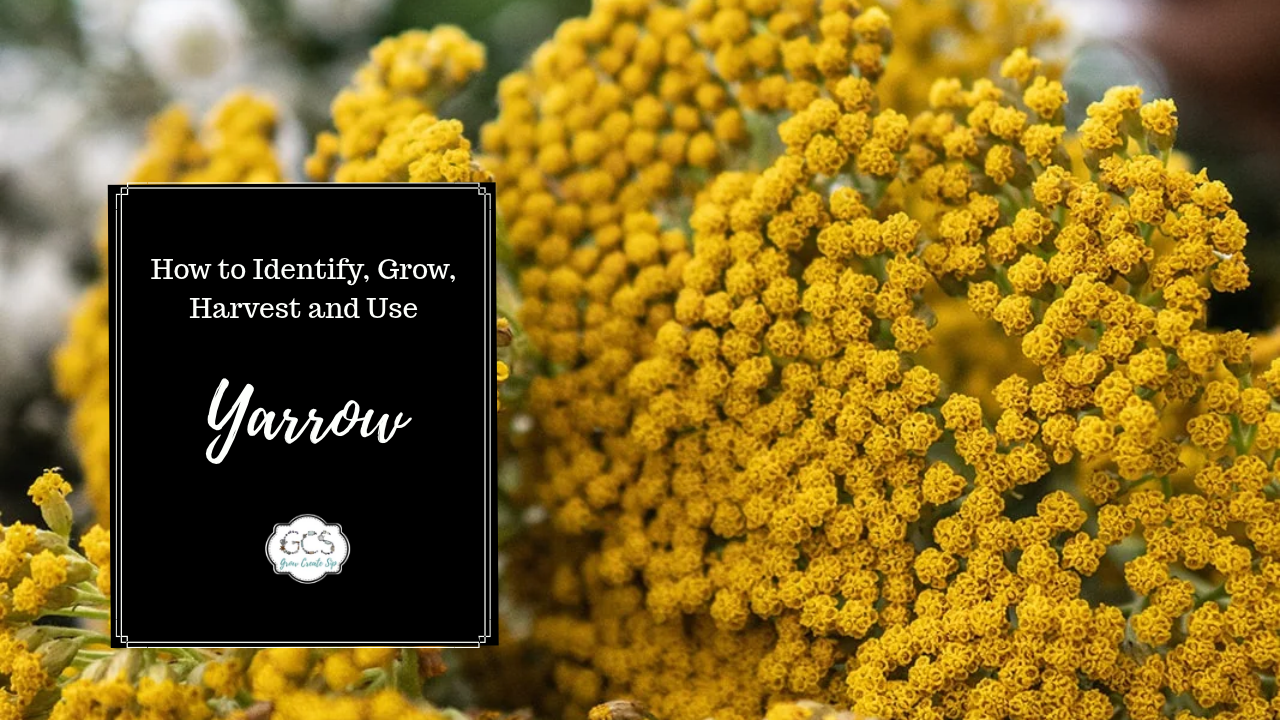
Around our house, yarrow has somehow become known as the nosebleed plant.
I originally started learning about yarrow close to a decade ago because one of our farm boys gets frequent nosebleeds. I had read about yarrow's long history as a wound herb, including its use by soldiers to help staunch bleeding. So early in my herbal experimenting, I decided that if powdered yarrow had traditionally been used on wounds, surely putting a little powdered dried yarrow up a bleeding nose made perfect sense.
It worked.
The farm boy, however, was not impressed with my ingenuity.
Thankfully, we've since discovered that taking the tincture works for him without the rather unpleasant experience of having Mom put powdered herbs up his nose. Somewhere along the way, though, yarrow became firmly filed in my brain as the nosebleed plant.
The funny thing is, yarrow does so much more.
We've used dried yarrow in teas, made and used it as a tincture, and hang-dried it over the years. We haven't actually grown our own yet, but it's on the list for the coming year. Going back through my old herbal notes reminded me just how versatile this pretty little plant is and why it's one of those herbs I think every budding homemaker herbalist should get to know.
Yarrow (Achillea millefolium) is a perennial herb traditionally used in teas, tinctures, compresses, infused oils, salves and other herbal preparations. Its long history as a wound and bleeding herb is only one piece of its story. Learning to properly identify, grow, harvest and prepare yarrow makes this pretty flowering plant a particularly useful addition to both the home apothecary and herb garden.
Jump to:
What Is Yarrow? How to Identify Yarrow Yarrow Look-Alikes Yarrow Medicinal Uses Ways to Use Yarrow
How to Grow Yarrow How to Harvest Yarrow How to Dry Yarrow Yarrow Safety & Contraindications Yarrow FAQs
This blog is provided by St. Fiacre's Farm LLC for informational purposes only. It does not constitute medical advice, and you should always seek the advice of a qualified healthcare provider for any medical questions or concerns. These statements have not been evaluated by the Food and Drug Administration. This product is not intended to diagnose, treat, cure, or prevent any disease.
Please note that we may earn a small commission on any purchases you make through our affiliate links, at no additional cost to you. Thank you for your support!
What Is Yarrow?
Yarrow's botanical name is Achillea millefolium, and it belongs to the Asteraceae family. You may also hear it called common yarrow, milfoil, bloodwort, staunchweed or soldier's woundwort. Those last few names give you a pretty good clue about one of the things this herb has historically been known for.
Yarrow is native to Europe and Asia and has become naturalized throughout North America. It is a perennial, so once established in the garden, it can return year after year.
The stems, leaves, and flowers are all used by herbalists. Yarrow contains volatile oils, sesquiterpene lactones, tannins, flavonoids, alkaloids, phenolic acids and coumarins, along with vitamin C and minerals including calcium, magnesium, potassium, iron, phosphorus and silicon.
For those learning herbal energetics, yarrow is an interesting plant. Its flavor profile is bitter and pungent, while its actions include aromatic and drying qualities. It's one of those herbs where studying the whole plant gives you a much better picture than simply memorizing one thing it's "good for."
If you don't have your own yarrow growing yet either, you can start with dried Yarrow Flower here while you get acquainted with it.
How to Identify Yarrow
This is one section I don't want budding home herbalists to skip. Knowing what an herb does isn't terribly helpful if you can't confidently identify the plant in front of you. And when you're wild harvesting, proper identification isn't optional.
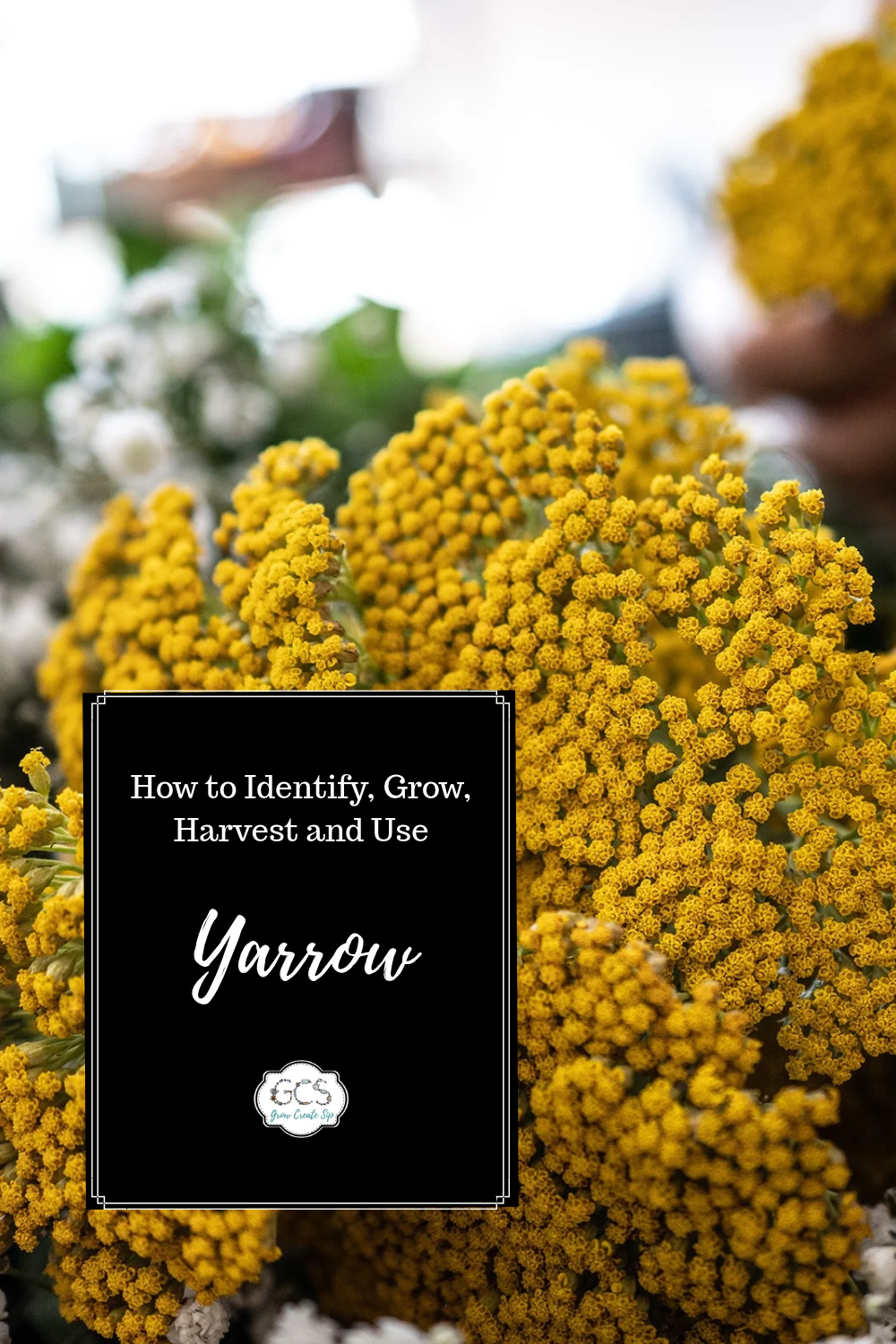
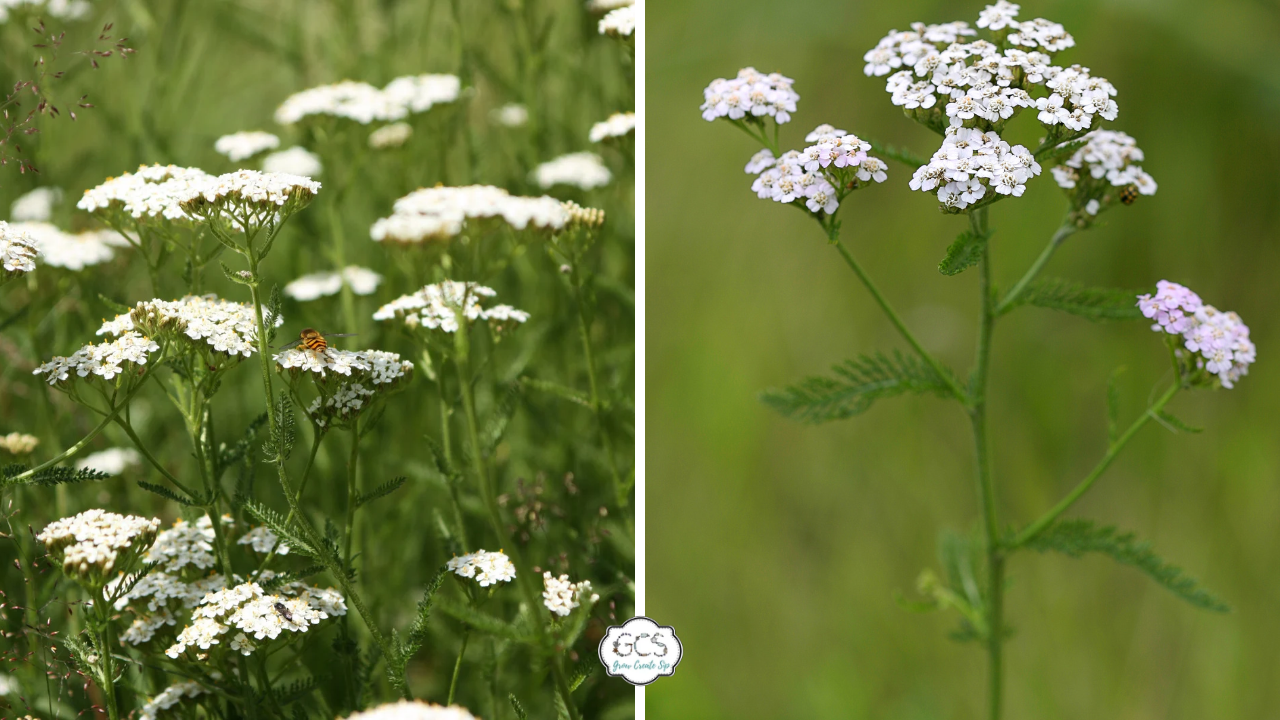
Yarrow generally grows about 1 to 3 feet tall. Its stems are upright, rough, and somewhat angular, and the plant can be gently hairy. At the top, you'll find clusters of many tiny flowers that together create a fairly flat or slightly domed flower head. Common yarrow flowers are typically white, although cultivated yarrows can come in other colors.
Look at the Leaves
The leaves are one of my favorite ways to distinguish yarrow.
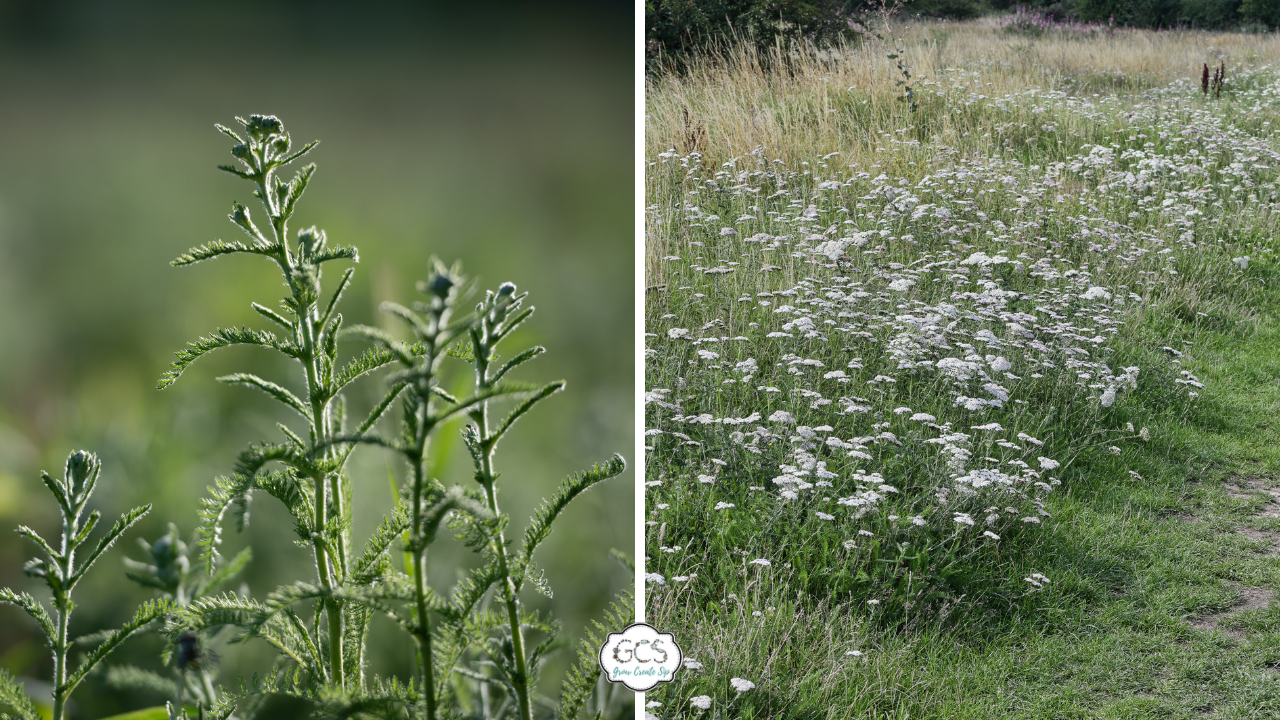
Yarrow leaves are finely divided and feathery, almost fern-like in appearance. The leaves can be around 3 to 4 inches long and about an inch wide, but instead of looking like one broad leaf, they're divided again and again into very fine little sections.
In fact, the species name millefolium points to this characteristic and is often translated as "thousand leaves." Don't identify yarrow by the white flowers alone. Get familiar with the entire plant, and especially those distinctive leaves.
Look at the Flowers
Yarrow's tiny individual flowers are grouped together into broad clusters at the top of the plant. From a distance, those clusters can look like one large white flower head, but when you get closer you'll see that they're actually made up of many small flowers.
Yarrow can bloom for a long stretch of the growing season, generally from spring into fall.
Look at the Overall Shape
Back up and look at the whole plant too. You're looking for an upright perennial with those finely divided fern-like leaves traveling up the stems and broad, relatively flat clusters of tiny flowers at the top.
The more plants you identify, the more you'll find that identification becomes less about one single feature and more about recognizing the whole plant.
Yarrow Look-Alikes: Queen Anne's Lace & Poison Hemlock
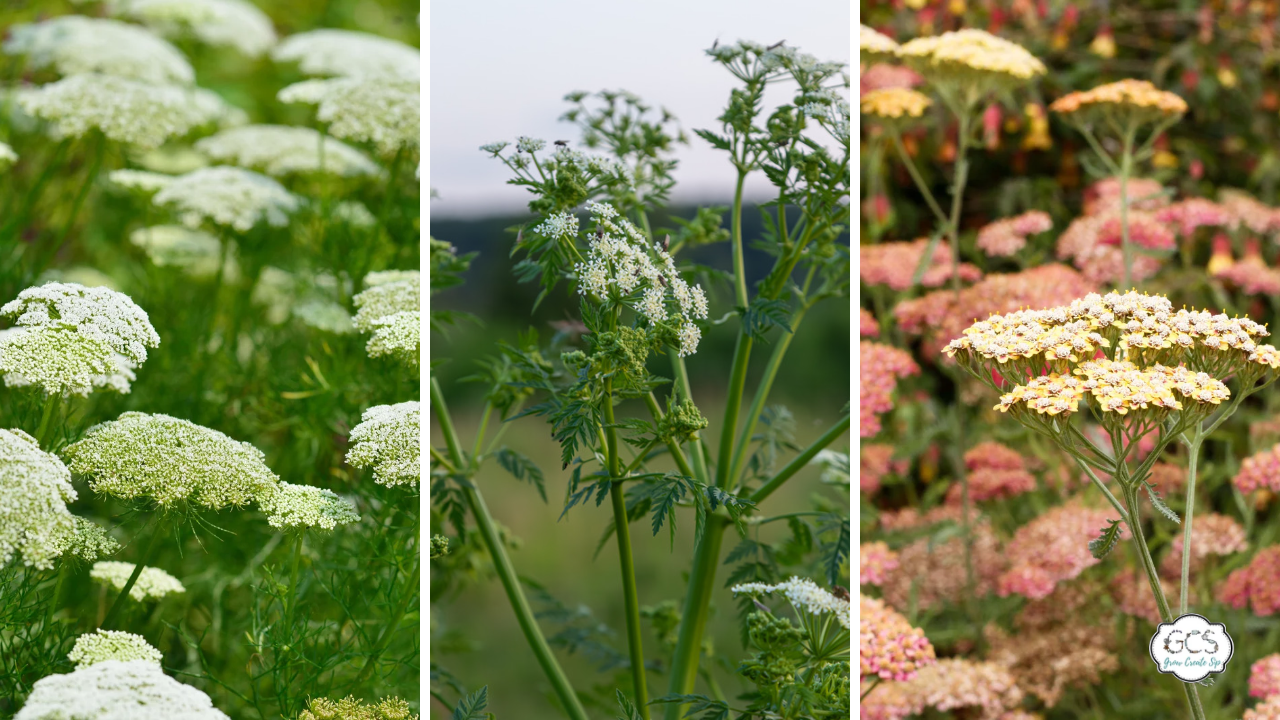
Yarrow can be confused by beginners with other plants that produce clusters of small white flowers, particularly Queen Anne's lace and poison hemlock.
I grew up with Queen Anne's lace everywhere, so to my eye it looks quite different from yarrow. But that kind of recognition comes from seeing the plants over and over again. When you're new to plant identification, "they just look different" isn't nearly enough information to go on. So slow down and look at the details.
Yarrow vs. Queen Anne's Lace
Queen Anne's lace has an umbrella-shaped flower structure called an umbel. Its flower stalks radiate outward from a central point, creating something that looks much more like an umbrella or bird's nest.
Yarrow's flowers form a flatter cluster across the top rather than that obvious umbrella structure.
Queen Anne's lace also has finely divided foliage, which is one reason beginners can confuse the plants, but its overall leaf shape, stem, and flower structure are different once you learn what you're looking for.
One useful field clue is the stem. Queen Anne's lace has hairy stems, while poison hemlock has smooth stems. But don't rely on one clue alone. Compare the leaves, stems, flowers, and overall growth habit.
Yarrow vs. Poison Hemlock
This is the look-alike I want you to take especially seriously because poison hemlock is toxic.
Poison hemlock can grow considerably taller than yarrow and has smooth, hollow stems that are often marked with purple or reddish-purple blotches or spots. Its small white flowers grow in distinct umbrella-shaped clusters.
Yarrow, on the other hand, is generally much shorter, has rougher stems, fern-like leaves, and flatter flower clusters.
If you are not completely certain of a wild plant's identity, don't harvest it for medicinal or culinary use. Take photographs, compare multiple botanical characteristics, use a good field guide, and learn from an experienced local plant person when possible.
Identification gets easier with time and practice. I can spot Queen Anne's lace quickly now because I grew up around it, but that familiarity came from years of seeing the plant. Give yourself the same opportunity to really learn yarrow before filling your harvest basket.
Yarrow Medicinal Uses & Actions
Here's where I had to remind myself that yarrow isn't just our nosebleed herb.
Traditional herbalism gives yarrow a surprisingly long list of actions. My herbal monograph lists yarrow as:
- Anti-inflammatory
- Diuretic
- Astringent
- Antiseptic
- Anodyne
- Diaphoretic
- Anti-microbial
- Anti-viral
- Vulnerary
- Emmenagogue
- Hypotensive
- Hemostatic
Those actions help explain why yarrow has found its way into so many different traditional herbal preparations over the years.
Yarrow for Bleeding & Wounds
This is obviously the category we know best around our house.
Yarrow has a long history as a vulnerary and hemostatic herb, meaning herbalists have traditionally associated it with wounds and helping to staunch bleeding. Even some of its old common names, including bloodwort, staunchweed, and soldier's woundwort, point directly back to that history.
It's also why powdered yarrow up a farm boy's nose seemed perfectly logical to me all those years ago. Would he recommend that method? Absolutely not. But it certainly made yarrow memorable around here.
Yarrow for Fevers, Colds & Flu
Yarrow is also classified as a diaphoretic herb. In traditional herbal practice, diaphoretic herbs have been used to encourage perspiration, which is why you'll often find yarrow included in old-fashioned herbal preparations for fevers, colds and flu.
Our monograph lists fever, colds and flu, respiratory concerns, pneumonia, and infections among yarrow's traditionally indicated uses.
Yarrow for Digestion
Yarrow's bitter and astringent qualities also help explain its long history as a digestive herb. Traditional indicated uses in my notes include indigestion, heartburn, bloating, constipation, diarrhea, IBS, and anti-ulcer properties.
This is a good example of why learning an herb's actions can be more useful than simply memorizing a giant list of ailments. Once you understand that yarrow is bitter and astringent, some of those traditional uses begin to make more sense together.
Yarrow for Menstrual & Circulatory Uses
Yarrow also has a long history in women's herbalism and circulatory preparations. Traditional uses listed in my monograph include amenorrhea, menstrual cramps and pain, fibroids and varicose veins.
The monograph also lists yarrow as an emmenagogue and hypotensive herb and includes high blood pressure among its indicated uses.
Other Traditional Uses of Yarrow
And we're still not at the end of yarrow's traditional résumé. Other uses recorded in my monograph include burns, eczema, hemorrhoids, sore nipples, gout, rheumatism, arthritis, anxiety, insomnia, hair loss, urinary-system support and brain health. That's quite a bit more than the nosebleed plant.
For a budding herbalist, I wouldn't look at a list like this and immediately start trying to use yarrow for everything on it. Instead, use it as a map for further study. Learn the actions. Learn the preparations. Pay attention to which body systems the herb has traditionally been associated with, and start building a fuller picture of the plant.
Ways to Prepare & Use Yarrow
Yarrow can be prepared in quite a few different ways. Including tea infusions, decoctions, tinctures, compresses, infused oils, salves or balms, gargles, and culinary powder.
We've personally kept things much simpler. Over the years, we've used yarrow as tea, tincture, and dried powder.
Yarrow Tea
For a basic yarrow tea, make with 1 to 2 teaspoons of dried herb. Enjoy up to three times per day. Yarrow can also be paired with other herbs. Some of the flavor pairings include peppermint, elderflower, chamomile, spearmint, ginger, licorice, thyme, lavender, and lemon.
If you're working with loose herbs, a fine stainless steel tea strainer makes small batches easy without having little pieces of herb floating around in your mug.
Yarrow Tincture
Tincture is probably the preparation most associated with yarrow in our house now. It's convenient, stores well, and, most importantly for our particular farm boy, doesn't involve Mom sticking powdered herbs up anyone's nose.
If you're new to tinctures, don't let them intimidate you. They are simply another way of extracting and preserving herbs. I have a complete guide on tincture making and crafting your own tincture recipes here.
Yarrow Compresses, Oils & Salves
Because of yarrow's traditional use for the skin and wounds, you'll also find it prepared externally as a compress, infused oil, salve, balm or herbal wash. An infused oil can also become the base for other preparations. If that's new territory for you, here's my guide to making herb-infused oils with medicinal herbs.
How to Grow Yarrow
This is the part we'll be putting into practice ourselves next year. After using yarrow for close to a decade, I think it's about time we stop buying all of it and give it a place in the garden.
Yarrow is a perennial and can be propagated from seed or by division. For starting from seed, my growing notes recommend sowing indoors in a sunny, warm location about 8 to 10 weeks before your last frost date. You can also direct sow in late spring or early summer.
Where Should You Plant Yarrow?
Choose a spot with full sun and well-drained soil. Yarrow does not like sitting in overly wet soil. Average soil is fine, and plants can be spaced about 1 to 2 feet apart. Established yarrow can be divided every 3 to 5 years to help maintain healthy plants.
Its perennial nature is one reason it appeals to me for a home herbalist garden. If I'm giving precious garden space to an herb, I especially like one that's useful enough to earn its keep and doesn't need to be started over every spring.
If you're trying to decide where medicinal herbs belong in your own garden, my Herbalist Garden: Getting Started guide can help you think through what you'll actually use and where to put it.
Yarrow Companion Plants
My yarrow monograph lists garlic, basil, spinach, cabbage, lavender, blueberries, and thyme as companion plants. It's also simply a pretty plant to have around. Beyond its place in the apothecary, those clusters of flowers can earn yarrow a spot in a cottage-style garden, and the flower heads can be dried for arrangements.
I like plants that can do more than one job. Medicinal herb, perennial garden plant, and something pretty enough to bring inside? That's my kind of garden space.
How to Harvest Yarrow
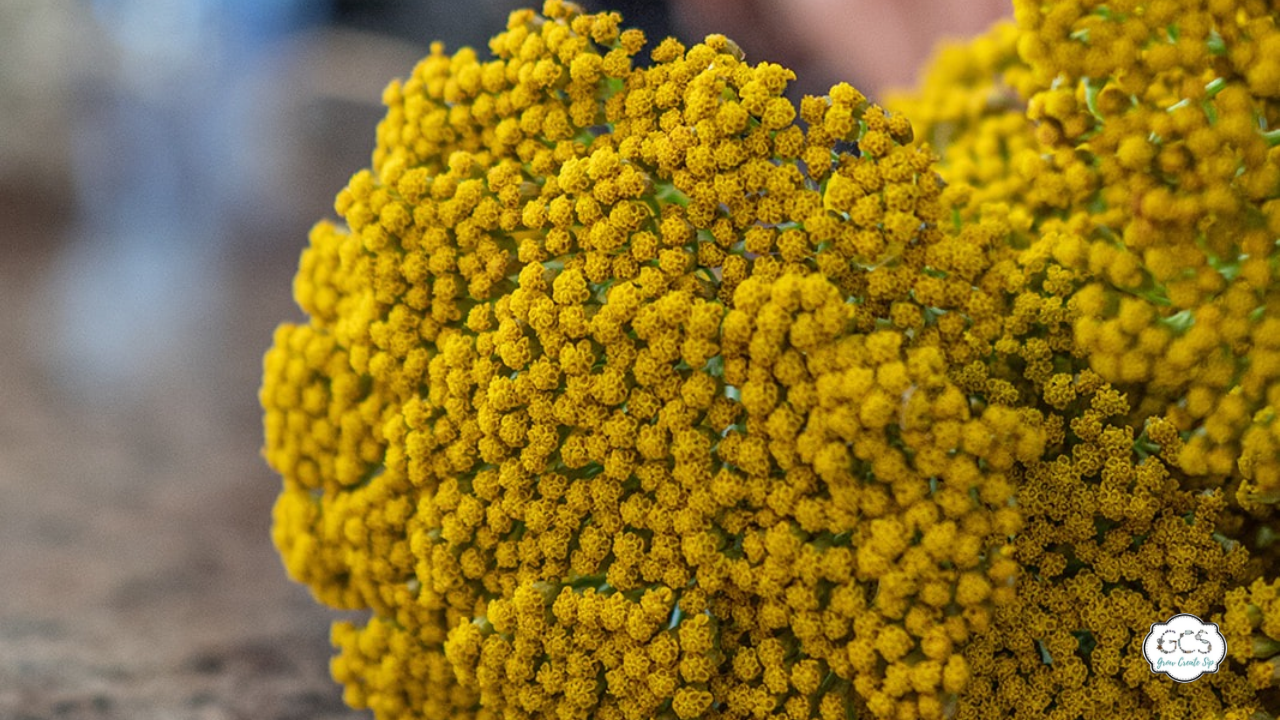
For medicinal harvesting, gather yarrow on a warm, sunny day after the dew has dried. If you're harvesting the flowering tops, the plant should be in full bloom. The leaves can be harvested throughout the growing season, although my notes indicate that they hold the most potency during spring and early summer.
The stems, leaves, and flowers can all be used, depending on the preparation you're making.
As with any herb you're harvesting yourself, make sure you're gathering healthy plant material from a clean area that hasn't been sprayed with herbicides, pesticides, or other chemicals. And if you're wild harvesting, make absolutely certain of the identification before clipping anything.
How to Dry Yarrow
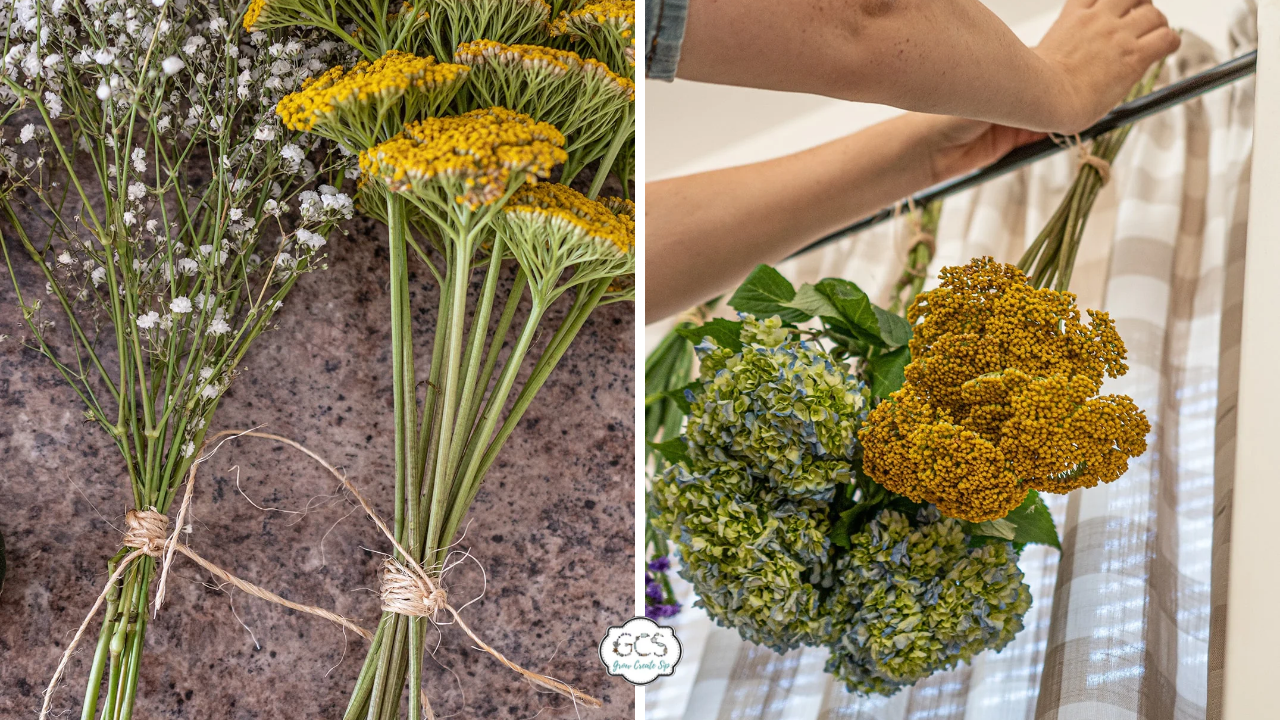
We've hang-dried yarrow, and it's a wonderfully simple option when you don't want to fuss with equipment. Gather the stems into small bundles and hang them upside down somewhere dry with good airflow and out of direct sunlight. Avoid making the bundles too large, especially if you live somewhere humid, because you want air moving around the plant material rather than trapping moisture inside.
Once everything is thoroughly crisp and dry, remove the useful plant material and store it in an airtight container away from heat, moisture, and direct light.
You can also use a dehydrator. My monograph recommends clipping off the flower heads, stripping the leaves from the stems, and spreading them on dehydrator trays. Dry on the lowest setting, around 95°F to 115°F, until the pieces snap easily.
If you don't own a dehydrator, don't let that keep you from preserving herbs. I've put together several ways to dry herbs without a dehydrator here.
Yarrow Safety & Contraindications
Yarrow belongs to the Asteraceae family. If you're allergic to plants in this family, you may also react to yarrow. Yarrow is not for use during pregnancy.
As with any medicinal herb, learn the plant before using it. Consider medications, health conditions, allergies, pregnancy, and the individual person rather than assuming that because something is an herb it is appropriate for everyone.
Yarrow FAQs
What is yarrow used for?
Traditionally, yarrow has been used for a wide variety of purposes. It is particularly well known as a wound and bleeding herb, but herbal traditions also include it in preparations related to fever, colds and flu, digestion, menstruation, circulation, skin and urinary concerns. Its listed herbal actions include astringent, hemostatic, vulnerary, diaphoretic, anti-inflammatory, diuretic, and more.
What parts of yarrow are used?
The stems, leaves, and flowers can all be used. Which part you choose may depend on the preparation you're making and when you're harvesting.
Can you drink yarrow as tea?
Yes. Yarrow can be prepared as an herbal infusion. My monograph recommends 1 to 2 teaspoons of dried herb for an infusion, and lists use up to three times per day. You can use yarrow by itself or blend it with herbs such as peppermint, elderflower, chamomile, spearmint, ginger, licorice, thyme, lavender, or lemon.
Can you make a tincture with yarrow?
Yes. Tincture is one of the traditional preparations for yarrow and happens to be one of the ways we've used it most in our own home.
Is yarrow a perennial?
Yes. Yarrow is a perennial and can be propagated by seed or division. Established plants can be divided every 3 to 5 years.
When should you harvest yarrow?
Harvest flowering yarrow on a warm, sunny day after the dew has dried and when the plant is in full bloom. Leaves can be harvested throughout the growing season, with spring and early summer being particularly useful times for leaf harvest.
How do you tell yarrow from poison hemlock?
Don't rely on the white flowers alone. Look at the whole plant. Yarrow is generally 1 to 3 feet tall with finely divided, fern-like leaves, rougher stems and relatively flat clusters of tiny flowers. Poison hemlock can grow much taller, has smooth hollow stems that commonly show purple or reddish-purple blotches, and has umbrella-shaped flower clusters. If you're uncertain about a wild plant's identity, don't harvest it.
Is Queen Anne's lace the same as yarrow?
No. They are different plants. Both can have small white flowers and finely divided foliage, which can confuse beginners. Queen Anne's lace forms distinct umbrella-shaped flower clusters and has hairy stems, while yarrow produces broader, flatter flower clusters and has its own distinctive fern-like leaves.
Can you dry yarrow for flower arrangements?
Yes. That's actually one more reason I'm looking forward to adding it to our garden. Yarrow's flower clusters can be dried and used in arrangements in addition to harvesting the plant for the home apothecary.

Maybe Yarrow Deserves More Than One Job
After close to ten years, I'm realizing we've probably typecast yarrow around here. It's easy to do that with herbs. We learn that peppermint is for an upset stomach, calendula is for skin, or yarrow is for bleeding, and then we stop there. But learning herbalism isn't really about collecting a list of which herb goes with which problem. It's learning the plants themselves.
That's one reason I'm excited to finally put yarrow in our garden. There is something different about knowing an herb from seed to flower, learning what its leaves look like when they first emerge, watching when it blooms, harvesting it with your own hands and figuring out which preparations actually earn a permanent place in your family's apothecary.
Maybe you have a "nosebleed plant" of your own, an herb you always reach for one specific reason without realizing how much more there is to learn about it. Pull out your herbal books and notes and give that plant another look. You might discover you've had a much more useful herb sitting in your cupboard all along.
If you're just beginning to build those skills, grab our Homestead Pantry Herbs E-Book. It's designed to help homemakers start with familiar herbs and learn practical preparations including teas, compresses, infused oils, and salves without making home herbalism more complicated than it needs to be.
Learn More About Growing & Using Herbs
- Herbal Monograph Guide
- Herbalist Garden: Getting Started
- Tincture Making and Crafting Your Own Tincture Recipes
- How to Make Herb-Infused Oils with Medicinal Herbs
- How to Dry Herbs Without a Dehydrator
- Top 10 Herbs Every Home Apothecary Needs (And How to Use Them)