Violet Leaf Salve: A Gentle Herbal Staple for Everyday Skin Support
Feb 26, 2026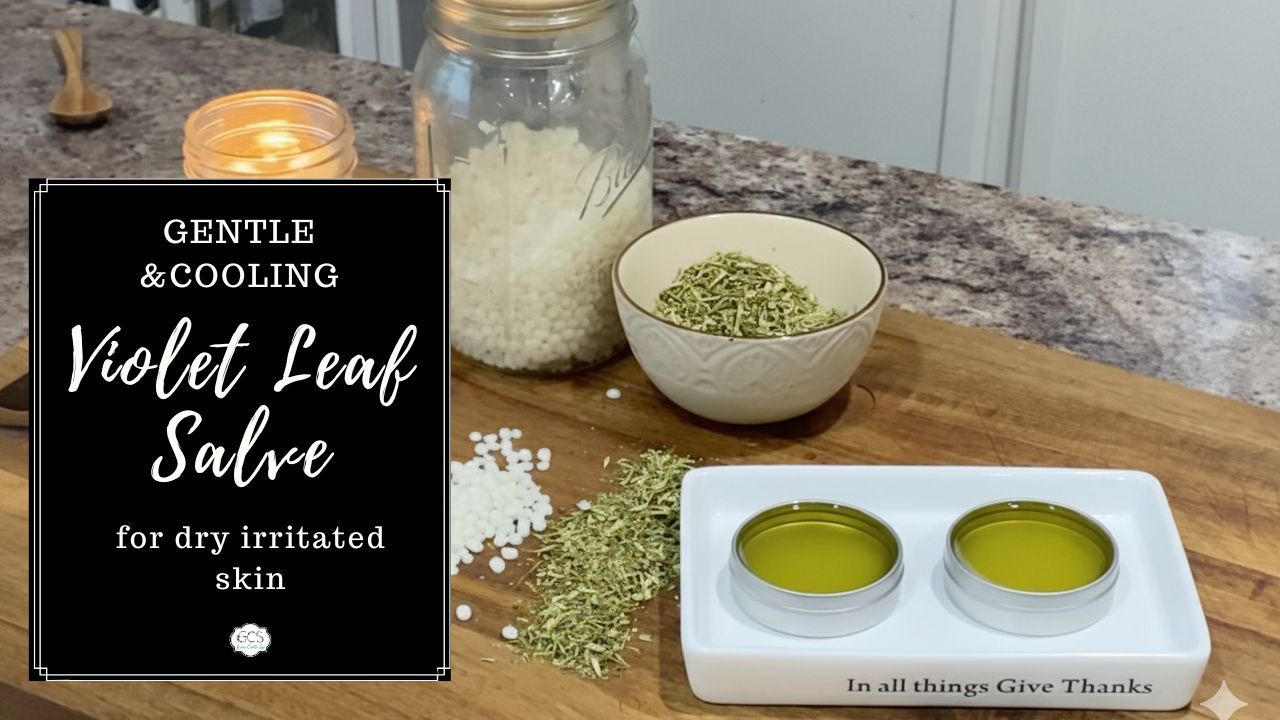
Violet leaf is one of those plants that’s easy to overlook because it grows so commonly and without much attention. While the flowers tend to draw the eye, it’s the leaves that have traditionally been used for external herbal preparations meant to calm and support the skin. In the rhythm of a slow-living home, finding these quiet treasures in the garden is a foundational part of building a home apothecary.
Violet leaf salve is a gentle, cooling, and dependable spring remedy perfect for a mother's herbal toolkit to soothe dry, irritated skin naturally.
What is Violet Leaf Salve? Violet leaf salve is a topical herbal preparation made by infusing Viola leaves into a carrier oil and thickening it with beeswax. It is traditionally used in a home apothecary for its cooling, moistening, and lymphatic-supporting properties, making it an essential for natural skin care and homemade remedies.
Made into a salve, violet leaf becomes a steady, dependable balm to keep on hand. It isn’t meant to work quickly or dramatically. It’s the kind of remedy that’s used gently and regularly, especially when the goal is comfort rather than intervention.
Jump to identification | Jump to traditional use | Jump to why it's useful | Jump to why a salve works | Jump to infused oil | Jump to salve instructions | Jump to FAQs | Jump to final thoughts
The Legal Stuff
This blog is provided by St. Fiacre's Farm LLC for informational purposes only. It does not constitute medical advice, and you should always seek the advice of a qualified healthcare provider for any medical questions or concerns. These statements have not been evaluated by the Food and Drug Administration. This product is not intended to diagnose, treat, cure, or prevent any disease.
Please note that we may earn a small commission on any purchases you make through our affiliate links, at no additional cost to you. Thank you for your support.

Getting to Know Violet Leaf
Common violets grow low to the ground and form patches of heart-shaped leaves that are easy to recognize once you know what you’re looking for. These leaves are the part traditionally used for topical remedies. Unlike the flowers, which are often used for syrups or decorative purposes, the leaves are valued for their support of the skin. They are often one of the first safely foraged greens of spring.
Because violets grow in so many places, it’s important to pay attention to where they’re harvested. Leaves should only be gathered from clean areas that haven’t been sprayed and aren’t close to roads or heavy foot traffic. Only a small portion should be taken from any one patch so the plant can continue growing normally. While I keep trying to get a patch established in my own garden, for now, the wild-harvested patches are a dream come true if they can be found!
How Violet Leaf Has Traditionally Been Used
Violet leaf has long been used in external remedies meant to cool and soften irritated skin. It’s not a stimulating herb, and it isn’t known for producing quick results. Instead, it has been relied on when steady, gentle support is needed.
This quality is part of why violet leaf has remained in use. It’s often chosen when stronger herbs would be unnecessary, especially in preparations intended for repeated or everyday use for the whole family. It is a cornerstone of herbalism for beginners due to its safety profile.

What Makes Violet Leaf Useful
In traditional herbal terms, violet leaf is considered cooling and soothing, with moistening qualities that help support skin that feels dry, tight, or irritated. These actions explain why it has so often been infused into oil and used in topical preparations for seasonal wellness.
Rather than working aggressively, violet leaf supports the skin in a slower, steadier way. This makes it especially well-suited for salves, where a small amount can be applied as needed over time. It’s the perfect addition to a mother’s herbal toolkit for those moments that require a soft, nurturing touch, similar to how we use Calendula for skin restoration.
Why a Salve Works Well
Salves are one of the most practical ways to use herbs on the skin. Infusing violet leaf into oil allows its supportive qualities to be preserved, while beeswax gives the balm enough structure to store and apply easily. If you need supplies, we carry natural Beeswax Pastilles in our shop.
Compared to fresh poultices, which need to be made and used right away, a salve is more convenient for regular use. Once it’s made, it’s ready whenever it’s needed without extra stepsa staple for cozy homemaking.
Maker's Tip: When making your salve, I recommend aimimg for a firmer consistency. A firmer salve holds up much better to warm room temperatures or the heat of summer. It is much easier to warm up a firm salve in your hands than it is to deal with the mess of a leaky, melted tin! Just remember—never leave your salves in a hot car, as they will melt faster than you think.
Storage and Shelf Life
Store your handcrafted violet leaf salve in a cool place away from direct heat and light. When made with properly infused oil and clean tools, it will usually keep for nine to twelve months. If the salve ever smells off or changes in texture, it should be discarded. Labeling jars with the contents and date makes it easier to keep track over time in your herbal apothecary.
Tips & Fixes for Salve Consistency
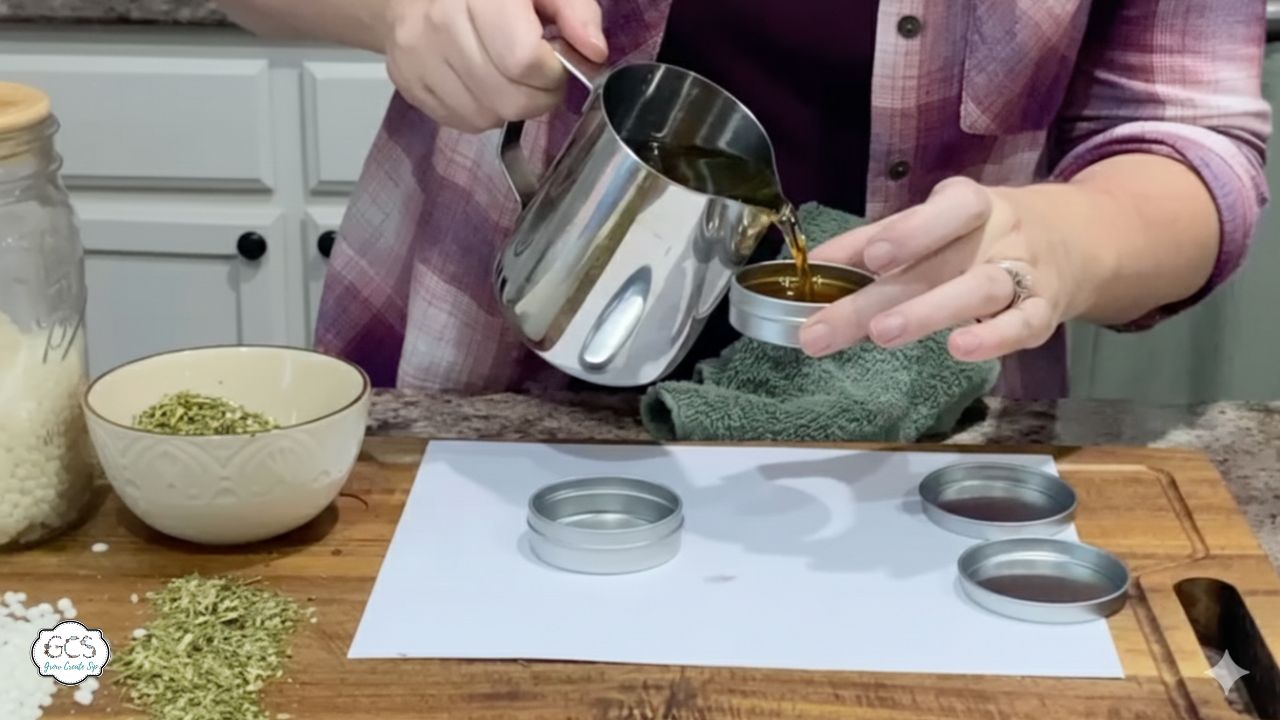
- If the salve is too soft: Gently place the jars back into your double boiler setup until the salve melts back into a liquid state. Add a small pinch (about 1/4 teaspoon) of additional beeswax pastilles, stir until melted, and let it set again.
- If the salve is too firm: Melt the salve back down using the same low-heat double boiler method. Stir in an extra tablespoon of your infused violet leaf oil to thin the consistency, then pour it back into the tins to cool.
- The "Spoon Test" Tip: Before pouring your entire batch into final tins, dip a cold metal spoon into the melted mixture and let it sit for a minute. The salve will firm up on the spoon instantly, giving you a "preview" of the final texture so you can adjust it before it fully sets.
Frequently Asked Questions
Can I use violet flowers in the salve?
While the flowers are beautiful, the leaves contain the highest concentration of the cooling and soothing properties traditionally used for skin support. The flowers are better suited for floral-infused syrups or honeys.
Is violet leaf salve safe for children?
Yes, violet leaf is considered a very gentle, "family-safe" herb. It is often used in salves for minor skin irritations or as part of a nourishing skin routine for all ages.
How long does it take for the salve to set?
Once poured into tins, it typically takes 1-2 hours to firm up completely at room temperature. You can speed this up by placing them in a cool spot.
Keeping Herbal Preparations Practical
Preparations like violet leaf salve are a good reminder that herbalism doesn’t need to be complicated. Working with one plant at a time and keeping the method straightforward builds familiarity without overthinking the process. It’s about returning to the basics of slow living and intentional care.
Violet leaf salve isn’t meant to impress or perform. It’s meant to be useful. These kinds of dependable preparations are often the ones that stay in regular use simply because they do what they’re meant to do for the home and family. If you're ready to enjoy a cooling cup of tea while your salve sets, our Mason Jar Mint Tea is the perfect refreshing companion to this spring project.
Read More About Violet Leaf & Natural Skin Care
- Calendula Salve: Infusing Oils
- DIY Bug Bite Relief Salve
- DIY Herbal Lip Balm Recipes
- Uses for Rose Petals Beyond Tea
- Growing Peppermint for Medicine
- Marshmallow Recipe with real Marshallow Root